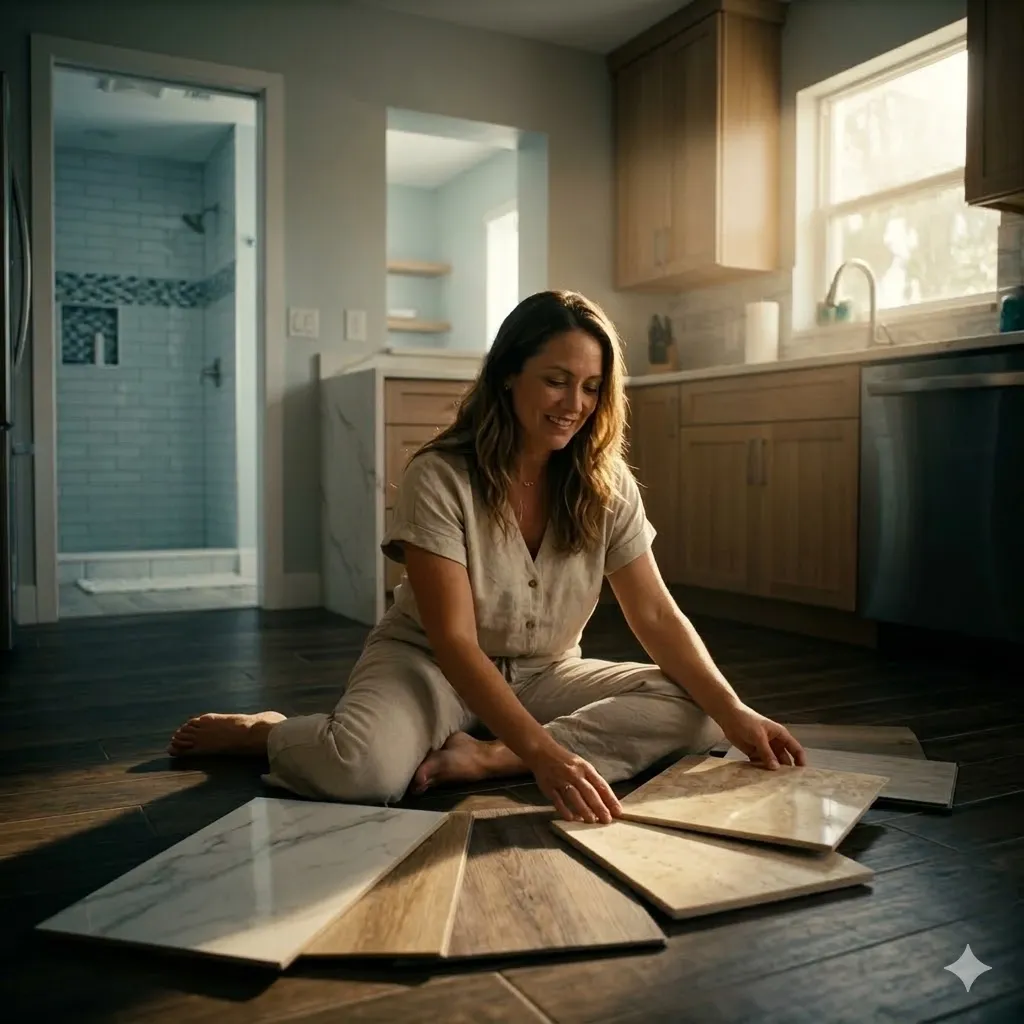
The kitchen and the bathroom are the two rooms where flooring choices go wrong most often. I've replaced more kitchen floors from water damage than I can count — and almost every one was preventable. The homeowner chose the wrong material, installed it wrong, or got bad advice from someone who didn't understand what Florida conditions actually do to a floor.
I'm Ruben, one of the co-founders of 3 Floor Guys. I handle most of our custom work and subfloor assessments. Here's what I actually recommend when Orlando homeowners ask me what to put in their kitchens and bathrooms — and one opinion that might surprise you.
Quick Answer — Florida Kitchens & Bathrooms
- →Best overall: LVP or SPC — 100% waterproof, handles slab installs, zero maintenance anxiety.
- →Best if you want real wood: Solid hardwood — get all the benefits (refinish 7–10 times, re-level, full lifespan).
- →What to avoid: Engineered hardwood in kitchens — gives you the cons of wood with none of the pros.
- ✗Bathrooms: Nothing wood-based. LVP or tile only.
The Florida Problem: It's Always the Moisture
Most Central Florida homes are slab-on-grade construction — no crawl space, the floor sitting directly on concrete. Concrete is porous and wicks moisture upward even when it looks dry. This is why products that work fine in a Seattle home with a wood-frame subfloor become problems here. Any flooring in a Florida kitchen needs to handle moisture from below as well as spills, humidity, and steam from cooking above.
Best Flooring for Florida Kitchens
1. LVP / SPC — The No-Stress Choice
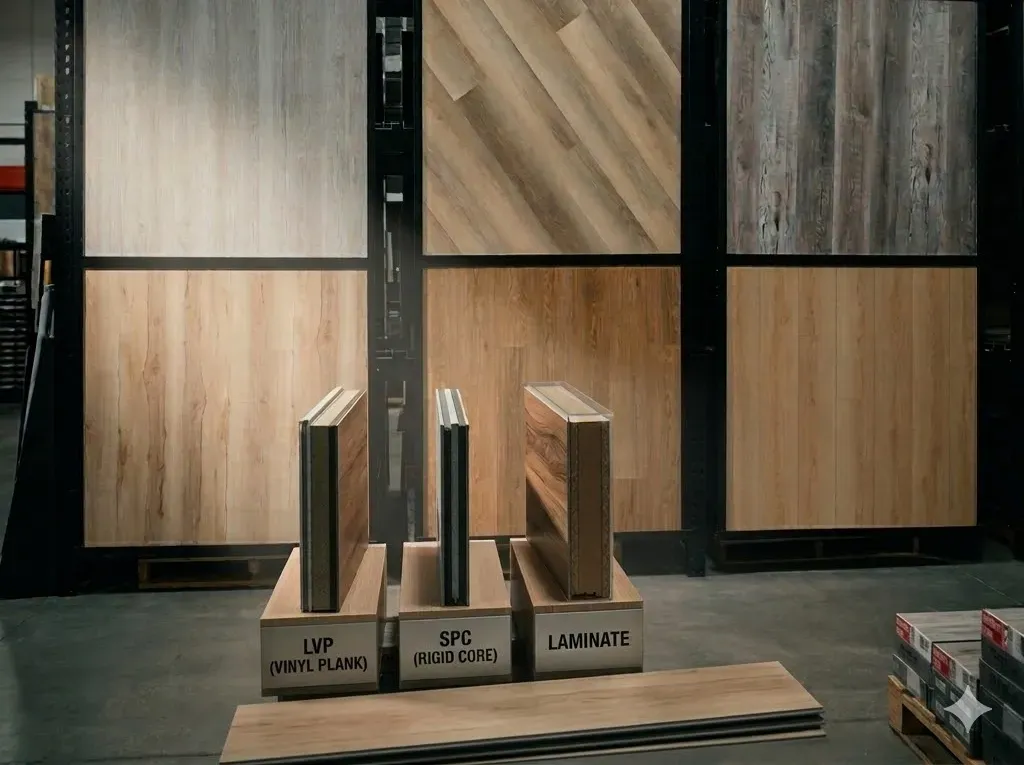
Luxury vinyl plank and SPC (Stone Plastic Composite) are the safest flooring choices for Florida kitchens. They're 100% waterproof — not water-resistant, actually waterproof — which means a slow dishwasher leak under the counter won't destroy them. They install directly over concrete, clean easily, and require no special maintenance.
- Best for: Anyone who wants zero maintenance anxiety — rentals, families with kids, anyone who cooks seriously
- Price range: $5–$9/sq ft installed for LVP; $7–$12/sq ft for SPC
- Our pick: SPC over standard LVP in kitchens — the rigid core handles Florida temperature swings better and sits flatter on uneven slab
- Honest downside: Feels hollow underfoot compared to hardwood. If you've ever had real wood floors, you'll notice it.
2. Solid Hardwood — If You Want Real Wood, Do It Right
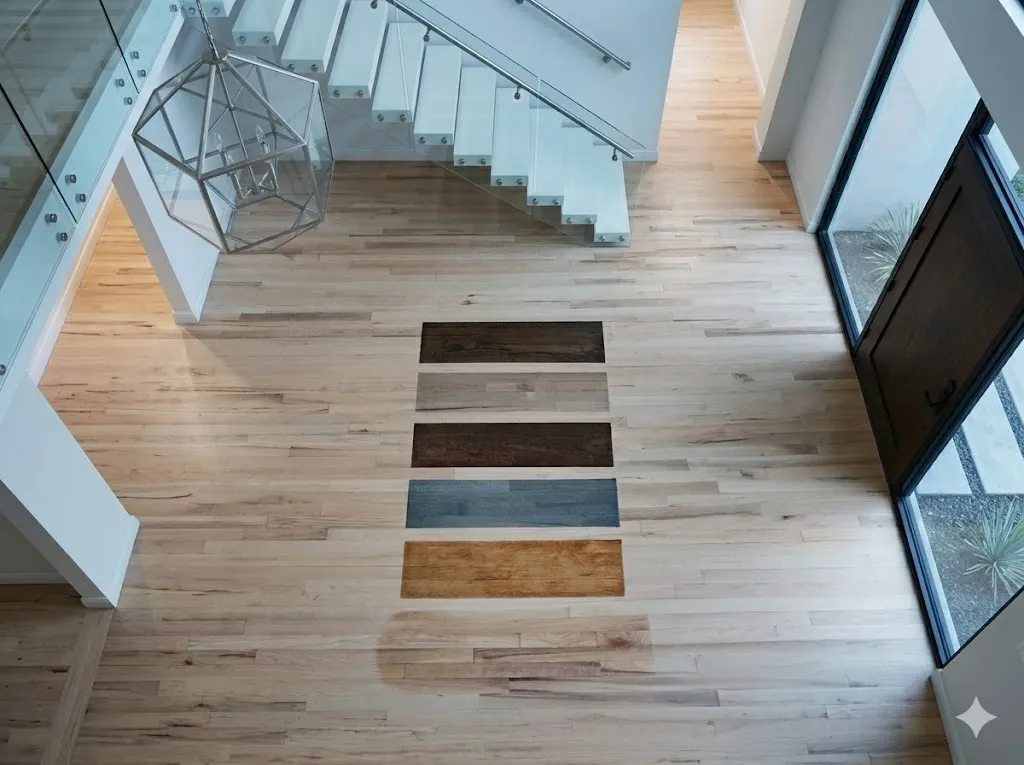
Here's the opinion that surprises people: if you want real wood in your kitchen, I'd rather see you put in solid hardwood than engineered hardwood.
Yes, solid hardwood in a kitchen requires more care. It will respond to humidity — expanding slightly in summer, contracting in winter. You need to wipe up spills promptly. It's not the right choice if you have young kids running through with wet feet or a history of plumbing leaks in that area.
But here's the thing: if you're going to have a floor that responds to moisture, you should at least get the full benefit of wood. Solid hardwood can be sanded and refinished 7–10 times. When boards cup or develop surface wear, we can re-level and refinish them back to flat. The floor can outlast the house if you take care of it.
- Best for: Homes with existing solid hardwood throughout — continuity matters, and a properly maintained kitchen floor can look great for decades
- Price range: $10–$20/sq ft installed, including materials and finishing
- What it requires: Prompt spill cleanup, humidity management (keep your AC running consistently), and periodic refinishing every 7–10 years
- The upside nobody talks about: When something goes wrong — a scratch, a water spot, a cupped board — we can fix it. Sand it down, re-level, refinish. With LVP, once the wear layer is gone, you replace it.
3. Why We Don't Recommend Engineered Hardwood in Kitchens
This is where most flooring guides get it wrong. Engineered hardwood gets marketed as the "safe middle ground" between solid hardwood and LVP. In a kitchen, it's not. It's the worst of both worlds.
Engineered hardwood has a plywood or HDF core with a thin hardwood veneer on top. That core still moves with moisture — it can still cup, gap, and warp when exposed to Florida humidity or a kitchen spill. You get the same cons as solid hardwood.
What you don't get: engineered hardwood can only be refinished 1–3 times before you've sanded through the veneer. You can't re-level a cupped engineered board the same way you can a solid board. When it gets damaged, your options are much more limited.
The Engineered Hardwood Problem in Kitchens
Engineered hardwood is a great product in the right application — bedrooms, living rooms, over concrete slab where solid wood can't go. In a kitchen, it gives you all the moisture sensitivity of solid hardwood with a fraction of the lifespan and repairability. If you're accepting the cons of wood, accept them for a floor that gives you the full pros too.
Laminate is another hard no in a Florida kitchen. It looks like wood but the core is compressed wood fiber. A slow drip under the sink will swell it permanently. Once laminate swells, you replace it — there's no refinishing or repairing it.
Best Flooring for Florida Bathrooms
1. LVP / SPC — The Only Sensible Choice
For bathrooms, the answer is simple: LVP or SPC. Nothing wood-based belongs in a Florida bathroom — not solid hardwood, not engineered hardwood. The daily humidity from a shower, condensation on the floor, wet feet — it's a different level of moisture exposure than a kitchen, and the risks aren't worth it.
Modern LVP looks convincingly like wood or stone. It's comfortable underfoot. It cleans easily. One important note: seal the transition between LVP and any tub or shower pan with silicone caulk. Water that sits at an unsealed seam will eventually work its way underneath.
2. Porcelain or Ceramic Tile — Most Durable
Tile is still the most moisture-proof option in a bathroom. Properly installed with a cement board substrate and sealed grout, it will outlast everything else. The downsides: cold underfoot, hard on your feet for long stretches, and grout requires periodic re-sealing.
We don't install tile — that's a tile contractor's job. But if you're renovating a heavily used master bath, it's worth considering alongside LVP.
The One Thing Most Contractors Don't Tell You
The substrate matters as much as the flooring. On a Florida slab, even with LVP, you need to check for moisture before installation. We do a calcium chloride test or relative humidity test on every slab install. If the slab reads above 75% RH, we address that before anything goes down — because no flooring product survives moisture coming up through unchecked concrete.
This is why we always assess the subfloor during the free in-home estimate. The right product for your living room might not be right for your kitchen depending on what's happening under the surface.
What We'd Choose for Our Own Homes
Kitchen: If I want zero worry — SPC, glued down over slab with moisture barrier. If I already have solid hardwood throughout and want continuity — solid hardwood in the kitchen, maintained properly. I would not put engineered hardwood in my own kitchen.
Bathroom: LVP in a powder room or half bath. Porcelain tile in a master bath with a walk-in shower. Every time.
Not sure what's right for your home?
We assess every room and subfloor condition before recommending anything. We'll tell you honestly what makes sense — including whether solid hardwood is the right call for your kitchen. Free in-home estimates across Orlando and Central Florida.
Request Your Free Estimate →